
The global memory chip shortage has become one of the most significant factors affecting the cost and availability of IT hardware worldwide. Businesses, IT departments, managed service providers (MSPs), system integrators, data centers, and consumers who rely on laptops, servers, desktops, networking equipment, storage devices, and cloud infrastructure are all feeling its impact.
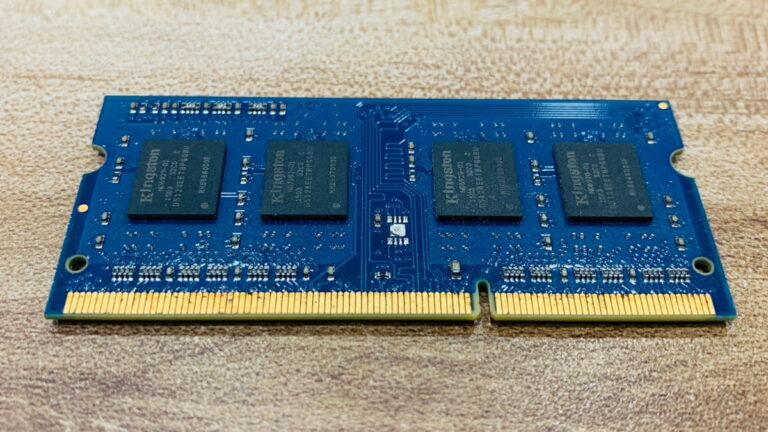
Memory chips such as DRAM (Dynamic Random Access Memory) and NAND Flash are essential components in nearly every modern computing device. When supply becomes constrained or demand rises faster than production, hardware manufacturers face higher component costs, longer lead times, and production delays. These costs eventually reach businesses purchasing IT equipment.
Understanding why memory shortages happen, how they influence hardware pricing, and what organizations can do to minimize risk helps IT buyers make better procurement decisions, optimize budgets, and reduce operational disruptions.
What Is the Global Memory Chip Shortage?
A memory chip shortage occurs when worldwide demand for semiconductor memory exceeds manufacturing capacity. Unlike software, memory chips require highly specialized fabrication plants (fabs), advanced manufacturing equipment, rare materials, and years of investment before additional production capacity becomes available.
The shortage primarily affects two major categories of memory:
- DRAM (used as system memory in computers, servers, and networking devices)
- NAND Flash (used in SSDs, smartphones, USB drives, memory cards, and enterprise storage)
Because these chips are present in almost every computing device, shortages affect the entire technology ecosystem rather than a single product category.
Why Memory Chips Are So Important
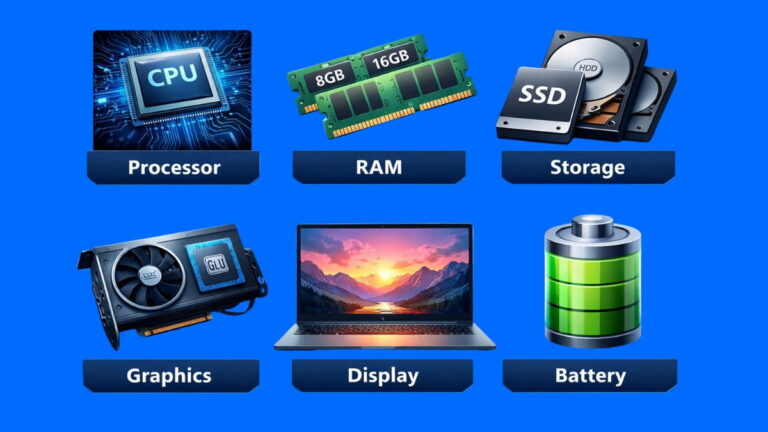
Every modern IT device depends on memory chips for performance and functionality.
| Memory Type | Common Uses | Impact if Supply Falls |
| DRAM | PCs, laptops, servers, workstations | Higher computer prices, server shortages |
| NAND Flash | SSDs, enterprise storage, smartphones | Storage devices become more expensive |
| HBM (High Bandwidth Memory) | AI servers, GPUs | AI infrastructure costs increase |
As organizations increasingly adopt artificial intelligence, cloud computing, virtualization, and big data analytics, demand for high-performance memory continues growing rapidly.
What Is Causing the Global Memory Chip Shortage?
Several interconnected factors have contributed to recurring shortages over the past few years.
Rapid Growth of AI Infrastructure
Artificial Intelligence has dramatically increased demand for advanced memory chips, particularly High Bandwidth Memory (HBM).
Modern AI accelerators require significantly larger memory capacities than traditional servers. Companies building AI data centers purchase thousands of GPUs simultaneously, consuming enormous quantities of memory.
The economics of AI memory are also influencing manufacturing decisions. High Bandwidth Memory used in AI infrastructure commands a significant premium compared with conventional memory, encouraging major memory manufacturers to prioritize AI-related production. Samsung, SK hynix, and Micron together control the majority of the global memory market, making their production decisions particularly important for the wider IT hardware industry.
As manufacturers shift a larger share of production toward AI memory, businesses that have no involvement in AI can still feel the impact. A company purchasing laptops or servers is effectively competing for semiconductor manufacturing capacity with rapidly expanding AI infrastructure. This is one reason AI-driven demand can translate into higher prices for conventional IT equipment.
Major cloud providers, including Microsoft, Google, Amazon, and Meta, continue investing billions in AI infrastructure, placing sustained pressure on global memory supply.
The scale of AI infrastructure investment is creating additional pressure on the memory supply chain. Large AI data centers can contain tens of thousands of GPUs, with each GPU requiring high-performance memory and supporting infrastructure. As technology companies continue expanding AI computing capacity, memory manufacturers have a strong financial incentive to prioritize higher-margin AI-focused memory such as High Bandwidth Memory (HBM).
This shift can affect the availability and pricing of conventional memory as well. Manufacturing capacity is limited, and production cannot be redirected instantly when demand changes. As more capacity is allocated to AI-related memory, traditional DRAM used in laptops, desktops, servers, and other IT equipment can face tighter supply and higher prices.

Expansion of Cloud Computing
Cloud service providers constantly expand their data centers.
Each server installed requires multiple DRAM modules and high-capacity SSDs. As cloud adoption grows globally, memory consumption increases across enterprise infrastructure.
The rapid deployment of new cloud regions further increases hardware demand.
Limited Manufacturing Capacity
Building semiconductor fabrication plants is among the most expensive industrial projects in the world.
A single advanced semiconductor fab may cost tens of billions of dollars and require several years before production begins.
Unlike many industries, semiconductor manufacturing cannot rapidly increase production when demand suddenly rises.
Geopolitical Risks
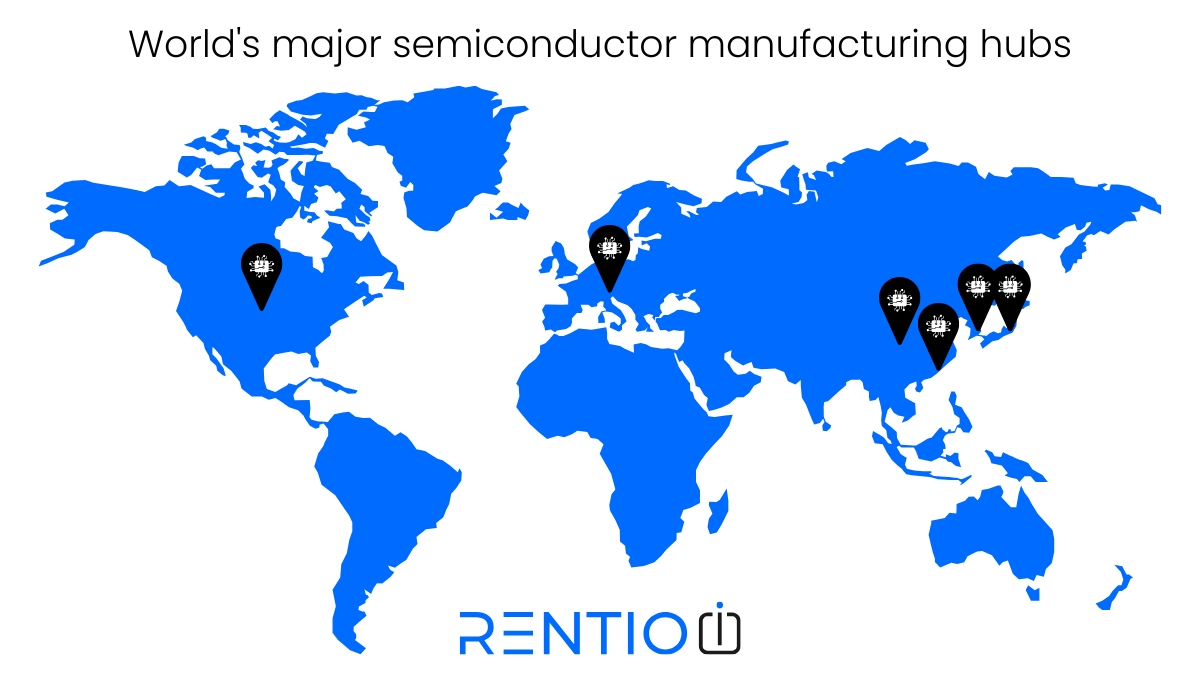
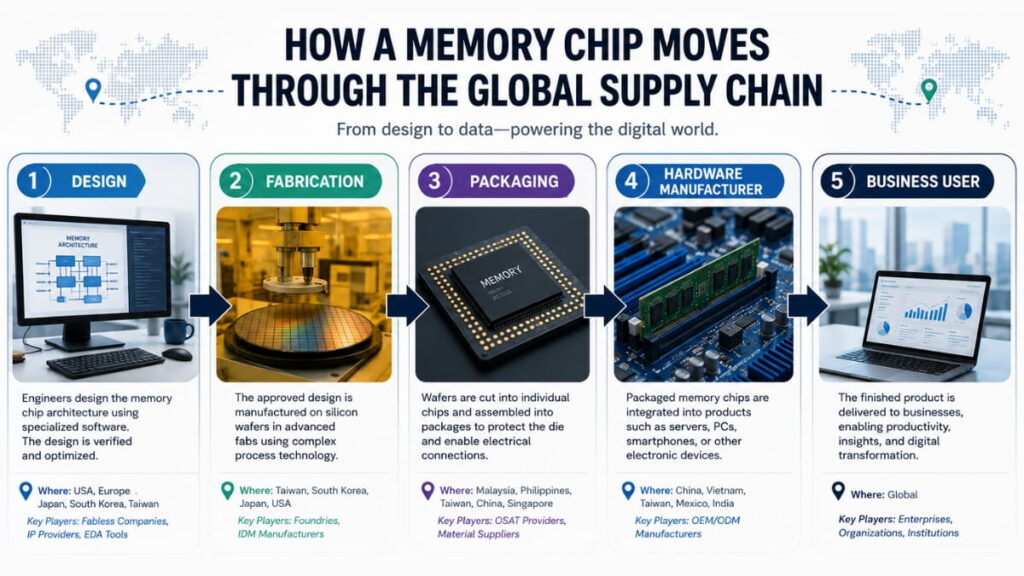
The semiconductor supply chain spans multiple countries.
Raw materials, chip design, wafer manufacturing, packaging, testing, and distribution often occur in different regions.
Trade restrictions, export controls, geopolitical tensions, and international conflicts can disrupt production or increase logistics costs.
Supply Chain Disruptions
Natural disasters, shipping delays, labor shortages, and transportation bottlenecks have repeatedly disrupted semiconductor supply chains.
Although logistics have improved since the pandemic, semiconductor manufacturing remains highly dependent on globally coordinated supply networks.
How Memory Chip Shortages Increase IT Hardware Costs
The effects extend far beyond memory modules themselves.
Higher Manufacturing Costs
When DRAM and NAND prices rise, every manufacturer producing IT hardware experiences higher production costs.
Examples include:
- Business laptops
- Desktop computers
- Enterprise servers
- Network appliances
- Storage arrays
- AI workstations
- Hyperconverged infrastructure
Manufacturers often pass these increased costs to distributors and end customers.
The increase in memory costs has been particularly sharp in some segments. DRAM prices have risen substantially, while DDR5 memory prices have increased several times from their previous levels. PC memory contract prices have also experienced significant increases within individual quarters.
These increases do not translate directly into an equivalent percentage increase in the final price of a laptop or server because memory is only one component of the overall system. However, when higher DRAM and NAND costs are combined with processors, storage, manufacturing, logistics, and other components, they can create significant upward pressure on the final cost of IT hardware.
More Expensive SSD Storage
NAND Flash shortages directly increase SSD pricing.
Since SSDs are now standard across business computing, organizations purchasing hundreds or thousands of devices experience noticeable budget increases.
Enterprise storage systems become especially expensive because they require large quantities of NAND memory.
Rising Server Prices
Servers contain significantly more memory than personal computers.
A typical enterprise virtualization server may include hundreds of gigabytes or even several terabytes of DRAM.
When memory pricing rises by 20%, total server costs may increase substantially depending on configuration.
Organizations expanding data centers often experience the greatest financial impact.
AI Hardware Becoming More Expensive
Many high-performance GPUs and AI accelerators use High Bandwidth Memory (HBM), which provides the high memory bandwidth required for demanding AI and high-performance computing workloads.
Demand from AI model training has created unprecedented pressure on HBM production.
As AI adoption grows globally, specialized AI hardware becomes increasingly expensive, affecting research organizations, enterprises, and cloud providers.
Delayed Product Availability
Manufacturers sometimes delay hardware launches when memory supply becomes constrained.
Businesses waiting for specific server models, networking equipment, or storage appliances may experience procurement delays lasting several weeks or months.
These delays can postpone digital transformation initiatives.
Industries Most Affected
Several sectors experience greater exposure due to their reliance on large-scale IT infrastructure. Industries most affected include data centers, healthcare, financial services, manufacturing, and education, where large-scale IT infrastructure depends heavily on servers, storage, and high-capacity memory. Rising memory chip costs increase hardware expenses, strain IT budgets, and can delay infrastructure upgrades and digital transformation projects.
Real-World Example: AI Is Changing Memory Demand
A few years ago, enterprise servers primarily supported virtualization, databases, and business applications.
Today, organizations increasingly deploy AI workloads requiring GPU clusters containing massive quantities of High Bandwidth Memory.
For example, AI training servers can require substantially more advanced memory than traditional enterprise servers. As organizations deploy larger GPU clusters, the amount of memory required per workload increases significantly. This growing demand can influence how manufacturers allocate production capacity, creating pricing pressure that extends beyond AI infrastructure to conventional servers, workstations, and other IT equipment.
Case Study: Enterprise Laptop Procurement
Imagine a multinational company planning to replace 5,000 employee laptops.
The procurement team receives quotations showing prices approximately 10-15% higher than previous purchasing cycles.
Investigation reveals several contributing factors:
- Higher DRAM pricing
- Increased SSD costs
- Supply chain logistics
- Increased component demand
- Inflation affecting manufacturing
Although memory represents only one component, its price increase contributes meaningfully to the overall hardware cost.
A Real-World Procurement Perspective
Our own experience at Rentio also reflects the recent pressure on IT hardware prices. As we regularly procure both new and refurbished laptops to maintain inventory for our rental business, we have observed noticeable price increases across both segments in recent months. In some cases, the price of the same laptop configuration has increased from one week to the next, making inventory planning and procurement more challenging.
For businesses that purchase hardware in volume, even a relatively small increase in the price of each device can have a significant impact on the overall investment. The changing prices also make it more difficult to maintain consistent rental inventory costs, particularly when popular laptop models need to be replenished frequently. This makes timely procurement, regular monitoring of supplier pricing, and flexibility around laptop models increasingly important when building or replenishing IT hardware inventory.
How Apple’s Recent Price Hike Reflects Rising Memory Chip Costs
Apple’s recent price increases across MacBooks, iPads, and other devices illustrate how rising memory costs can eventually reach finished consumer products. Reports indicate that Apple has raised prices on several product categories, with MacBooks and iPads seeing noticeable increases amid higher DRAM and NAND Flash costs, AI-related demand, and constrained supply.
While iPhone pricing has remained relatively stable for now, analysts suggest future models may also face upward pressure if memory costs continue to rise. This reflects a broader industry trend where even premium brands like Apple are adjusting pricing structures to absorb higher semiconductor input costs rather than fully absorbing them internally.
The situation illustrates how AI-driven semiconductor demand can eventually affect products far removed from AI data centers. Memory manufacturers are allocating more capacity toward high-value AI applications, while consumer and enterprise hardware manufacturers continue competing for conventional memory. When component costs rise beyond what manufacturers can absorb, those costs eventually move through the supply chain and reach customers.
This creates a broader connection between the AI infrastructure boom and everyday technology costs. A business buying laptops, desktops, servers, or storage equipment does not need to operate an AI workload to be affected by the rapid expansion of AI infrastructure. The competition for limited semiconductor capacity can increase the cost of hardware across the wider technology market.
Expert Insights from the Semiconductor Industry
Industry analysts consistently note that memory markets operate in cycles rather than following a steady pricing pattern.
Periods of oversupply often reduce hardware prices, while rapid demand growth—especially from AI infrastructure—can quickly tighten supply and increase costs. Experts from semiconductor market research firms such as Gartner, IDC, TrendForce, and Counterpoint Research regularly emphasize that AI-driven investment is reshaping long-term demand for advanced memory technologies.
Businesses should therefore avoid assuming that current pricing conditions will remain stable.
How Businesses Can Reduce the Impact
Plan Procurement Earlier
Waiting until hardware is urgently required often limits purchasing options.
Long-term planning provides greater flexibility when supply becomes constrained.
Standardize Hardware
Reducing the number of device models simplifies procurement.
Manufacturers may have greater availability for standardized enterprise configurations.
Monitor Market Trends
Following semiconductor industry reports helps IT leaders anticipate pricing changes.
Organizations planning major infrastructure projects benefit from understanding supply cycles.
Consider Phased Upgrades
Instead of replacing every device simultaneously, businesses may divide projects into multiple phases.
This spreads procurement risk across changing market conditions.
Work with Reliable IT Suppliers
Experienced technology partners often have stronger distributor relationships and better visibility into inventory availability.
They may also recommend alternative configurations with shorter lead times.
Consider Renting IT Hardware Instead of Buying
For short-term projects, seasonal demand, employee onboarding, events, startups, or rapidly growing businesses, renting IT hardware can be a cost-effective alternative to purchasing. IT equipment rentals help organizations avoid high upfront costs, reduce exposure to fluctuating hardware prices, access the latest technology, and scale infrastructure quickly without long-term capital investment. This approach is particularly valuable during periods of memory chip shortages and rising IT hardware costs.
Will Memory Prices Eventually Fall?
Historically, memory pricing has been cyclical.
When manufacturers expand production capacity and demand stabilizes, prices often decline.
However, there is another factor that could eventually change the direction of memory prices: overcapacity. The current AI infrastructure boom is driving technology companies to commit enormous amounts of capital to data centers, GPUs, networking equipment, and memory. If infrastructure is built significantly faster than actual demand develops, the industry could eventually experience excess capacity.
In such a scenario, memory prices could fall sharply as manufacturers compete to utilize their production capacity. The opposite is also possible. If AI adoption and data generation continue growing faster than new semiconductor capacity, memory shortages could persist and prices could remain elevated for longer.
The key uncertainty is therefore not whether AI will create demand for memory, but whether the growth in demand will be sufficient to justify the enormous expansion of infrastructure taking place today.
However, long-term demand drivers continue growing:
- Artificial Intelligence
- Cloud computing
- Edge computing
- 5G infrastructure
- Autonomous systems
- Enterprise digital transformation
Because these technologies require increasing amounts of memory, dramatic long-term price reductions may become less frequent than in previous decades.
Future Outlook
The semiconductor industry is investing heavily in new manufacturing facilities worldwide.
Governments across the United States, Europe, Japan, South Korea, India, and other regions are supporting domestic semiconductor manufacturing through incentive programs aimed at strengthening supply chain resilience.
At the same time, memory manufacturers continue developing higher-density DRAM, faster NAND Flash, and advanced packaging technologies to support AI, cloud computing, and next-generation enterprise workloads.
Although future shortages cannot be eliminated entirely, greater manufacturing diversification should improve global supply stability over the coming years.
Impact of the Global Memory Chip Shortage on India’s IT Market
India’s IT and electronics sector is highly exposed to the global memory chip shortage because the country imports most of its semiconductor requirements. Rising DRAM and NAND prices have increased the cost of laptops, servers, SSDs, smartphones, and enterprise IT equipment, impacting businesses and consumers alike. According to a recent NITI Aayog report, 90-95% of India’s semiconductor demand is met through imports, making the country particularly vulnerable to global supply disruptions. Industry reports also show that India’s memory chip imports rose by over 53% in FY26, reflecting higher prices driven by AI-led global demand.
Practical Recommendations for IT Buyers
Organizations purchasing IT hardware can reduce financial risk by following several practical strategies:
| Recommendation | Benefit |
| Forecast hardware needs 6-12 months ahead | Avoid emergency purchasing |
| Track semiconductor market reports | Better budgeting |
| Maintain approved hardware alternatives | Reduce supply risk |
| Partner with experienced IT vendors | Improve procurement flexibility |
| Evaluate total cost of ownership | Better long-term investment decisions |
These practices help organizations remain resilient during periods of market volatility.
Key Takeaways
The global memory chip shortage is more than a temporary supply issue. It reflects a rapidly changing technology landscape where AI, cloud computing, and digital transformation continue driving unprecedented demand for semiconductor memory.
Higher DRAM and NAND prices influence the cost of laptops, desktops, servers, storage systems, networking equipment, and AI infrastructure. Organizations that understand these market dynamics can make smarter purchasing decisions, improve budgeting accuracy, and reduce procurement risks.
Rather than reacting to price increases after they occur, proactive planning, supplier diversification, and ongoing market awareness provide the best defense against future hardware cost fluctuations.

Sarita is a Rental Operations Executive at Rentio, specializing in laptop and IT equipment rentals. She helps businesses choose the right devices, coordinates seamless deliveries, and shares practical insights on technology, device configurations, and rental solutions.